Friday, October 29, 2010

Friday funny: Ukuleles, Nirvana, and the Kaiser Chiefs

These people are awesome.

I first heard of them years ago when I saw this.


Then, this week, I found this.


Question: What creative zaniness has gotten your attention?

Previous friday funny
A clever OK Go video

Thursday, October 21, 2010

Happy Halloween: Pandemic books from the archives


Stephen King's The Stand and Richard Preston's The Hot Zone take center stage in this videopost from my archives.

Have a terrifying read!

Questions: What books both scare you and captivate you enough that you'd still read them again?

Wednesday, October 20, 2010

Using Cloud Browse to view Flash on an iPad, iPhone, or iPod Touch


One of the consistent, monotonous complaints about the Apple mobile platform has been the inability of the iOS devices to run and display Flash applications.

Although there is little reason to believe this policy will ever change--much less in the near future--there is something helpful at which iOS devices excel. The iPad makes a fantastic remote display, as evidenced by a variety of VNC-inspired free and more feature-rich applications.

Cloud Browse is a free application that provides just such an environment. A generous benefactor somewhere in Asia (judging from the timestamps) runs an instance of Firefox on a *nix server, and the CloudB rowse application provides a window to view it. Considering the obvious geographical separation I had while testing it, I found latencies minimal. The external machine has no problems whatsoever loading and displaying Flash-based apps, so the iPad has no problem displaying them. (The app can also run on the iPhone.)

Firefox is not actually running on the iPad. Essentially, the user is looking at a "picture" of Firefox running somewhere else. There are certain limitations:

  • Because of hardware and network limitations, the application runs on a timer. When your session is up (apparently after about ten minutes), your instance is cancelled and the resource is allocated to someone else.


  • You may occasionally receive a message when starting the application that all instances are in use and you should wait a while.


  • Since the app is a picture of a browser running somewhere else, normal copy/paste functions will not work between other iPad apps and the Firefox browser running in CloudBroswe. A notable exception is made for pasting URLs and search text by clicking the "Web" button at the top of the interface.


  • The keyboard is controlled manually instead of automatically. Use the keyboard button at the top of the interface to display it, and the keyboard close button at the bottom right of the keyboard to hide it.


  • Since the Firefox instance is running externally to the ipad, there's no history or ability to save bookmarks or work in progress. The latter can be especially frustrating if the user is in the middle of a project.


The bottom line is that, for a free app, it's very very useful. You can find it at the app store by searching for Cloud Browse.

Questions: How important is Flash to you? Have you found any other app (free or otherwise) that does a better job than Cloud Browse?

Tuesday, October 19, 2010

There is no condemnation


Used by permission, Angus McDiarmid


She took some small comfort in the irony that the infidels who occupied her land trumped her own law. Capital punishment for moral infractions? Hardly, when Emperors had represented the epitome of moral infraction themselves. Tacit cultural approval through complicity would do fine under the immediate circumstances. If the government did it, it must be okay.

Though she could be ashamed for what she was about to do, she knew there would otherwise be little consequence. So she accepted instantaneous pleasures in exchange for turpitude.

But her infraction was discovered, and she found herself shocked by the unanimity of the townsmen, a monolithic hatred and unrestrained assignment of blame, including from the one she had given herself to. She was branded a whore, a harlot, a subversive of ill-repute, a seductress. Her category of evil was deemed too dangerous for the community. It was decided in seconds that she would be eradicated quickly, before the Imperial authorities would even notice.

Save for the wails of terror, she was silent as she was led to her execution. Anything she could say in her defense would require her to simultaneously admit to her involvement, would force her to publicly admit her flaw, expose her shame, forever brand her an outcast, not that "forever" would last more than a few more minutes. She prayed not for a painless death--she knew it would be painful--but for a swift one. She did not want pain.

She was paraded before the community, forced to feel the burning gaze of those who were about to silence her permanently. She stared back in arrogance, not averting her gaze in shame, but enraged by the community's hypocrisy. For each one whose visage filled with violence and excitement that they finally had someone to make an example of, she peered back into the soul of one whom she knew--by rumor or reputation--had committed the same infraction she had, gloating at the only difference, that they got away with it.

Except one. One unfamiliar man. The blood drained from her face when she locked eyes with him. Who was he? Why was he here? She read in his glance not one looking at her, but one looking in her. Like all the others, he knew what she had done, and yet she saw in his staid expression that he knew who she was, had known her whole life who she was, why she had done it, how ashamed and guilty and spirited and proud and responsible and terrified she was. Mostly, she was less afraid to die than she was to keep looking into his eyes. If he wanted her, it was with a passion she had never experienced before, and it was far more dangerous than any terror she could face from the rocks that would be projected at her in a moment.

It was then that she realized the difference between him and the others. He was holding no rock. His eyes bored through her soul deeper than any rock could ever cut anyway; what did he need a rock for?

And then she saw something even more horrifying than any of the horrifying moral leaps she had taken to get herself into this situation to start with. The gaze of the people was no longer on her. It was on the man. In a flash, she realized this wasn't even about her. It was about him. She was being used. She was going to die and she didn't even really have anything to do with it. It wasn't about her guilt. It was about their pride. She was a convenient pawn.

They turned to him as if to a leader they wanted to get rid of. And why not, with that gaze, that boring, piercing glance that penetrated their motivations? They told the man the accusation against her (as if he hadn't read it in her already). They reminded him of their law (as if he hadn't written it). They knew what they should do, but they asked him anyway. If he spoke mercy, he would be rejected as an enemy of the culture, an approver of licentiousness, a deviant. If he spoke wrath, he would be condemned by the occupiers for inciting an act of murder, and they would be rid of him.

He began to write. Something. Some near him could see it. Most could not. Some strained to see what it was. He knew them. He knew what they needed to see.

And knowing the Law, he invited them to carry out their capital act of silencing the sinner. To her horror, he actually invited them. Sort of. He said that whoever was not guilty of the same behavior was qualified to begin her execution.

And he kept writing. He knew them. Each one. He looked into their souls with the same look he had given her. One at a time, they dropped their rocks and walked away, until only two remained.

He could have asked her what she had done. She knew she would have told him. Every detail. Every thought that had gone through her head. Every touch and every feeling and every fear of what consequence would come upon her. Or upon her lover. Or upon his family, or hers. She would have told him everything. But he didn't ask.

She shuddered when he finally finished writing and looked up at her, then around at the empty square, then back at her.

"Where did they all go? No one faults you?"

He wasn't asking for his own edification. She was mysteriously aware that he knew everything, had already anticipated everything before it began transpiring. She knew he was asking if she understood why the square had been vacated.

"They...left." They didn't have the stomach for it. He had saved her with cleverness, with their own trick, but at what cost? At the cost of everyone knowing both accusation and mercy, exposure and forgiveness, completely. Totally. Overwhelmingly. Consumingly.

That look again. Love and wrath together. His disappointment in her behavior was palpable. So was his love for the person she was when she was not sinning. She wanted him, and hated him, and loved him, and loved him for not letting her want him or hate him for too long. That love. It was deeper than anything she had ever seen. It was not the look of a man who loved. It was Love. Love was standing before her.

Love spoke to her. "I don't condemn you either."

But she knew that he knew she was guilty. There must be more? How could such purity allow such impurity? She felt she would be annihilated any second anyway, automatically ceasing to exist, in the presence of such perfection. He still had that look. Serious, penetrating, knowing who she was and what heinousness she was capable of, and what great acts of tenderness and compassion, too. What a confused mess of impulses she was, but in a word, she knew he could sort them out.

And then Love spoke to her once more. This time with a command. She knew a command was coming. If Love had told her to fly, she would have. "Don't do this again."

And she obeyed.

This post is part of Bridget Chumbley's One Word at a Time blog carnival on Condemnation.

Previous carnival entries have focused on lust, love, church, peace, patience, kindness, grief, faithfulness, gentleness, and brokenness.

The Carnival is open to anyone who would like to participate. It is designed to encourage dialogue, cooperation, and personal growth.

Monday, October 18, 2010

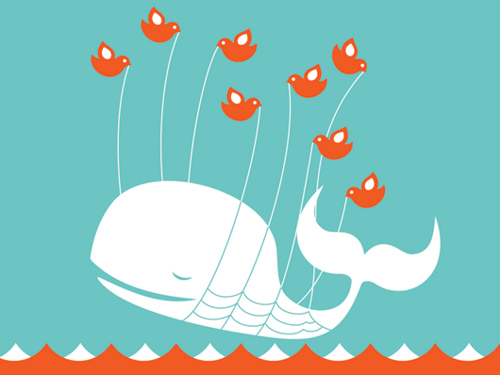
What's wrong with the new Twitter?


Used with permission, Buzz Bishop


Twitter announced universal availability of their new layout. Immediate user response was about as receptive as public opinion on the new Gap logo. It's bad. It's really bad.

The problem with the new Twitter site is easy to identify. The company that has given so many of us an opportunity to establish and protect our personal or corporate brand is now losing sight of its own. Twitter's strength has always been in its elegant simplicity: 140 characters, maybe a link or a photo, maybe a hashtag. Now, in response to a broad spectrum of user perspectives and an increasing need to generate capital, it risks pandering to the loudest corporate influences and thereby losing the very things that make it distinctive, alienating the large majority of individual users who appreciate the "text messaging on steroids" interface.

Old Twitter     New Twitter
Old Twitter vs. New Twitter
(click on either image to enlarge)


In short, the new Twitter is unnecessarily complicated. In the old Twitter, the left column was for reading and writing, and the right column was for everything else, like settings. In the new Twitter:

  • The right column changes depending on what I select or click in the left column.


  • User information automatically pops up in a small window when I hover or click, which is especially annoying and unhelpful in a mouse less, mobile environment such as an iPad.


  • The left column is now for reading, writing, and a random assortment of other things, like saved searches, but notoriously not direct messages.


  • The left column now scrolls infinitely, loading more data automatically as you scroll down, which is also a thoroughly annoying behavior when attempting to navigate quickly with a scrollbar.


  • I spend most of my time trying to scroll to the right place, moving my eye about the screen chaotically, wondering where I am, instead of reading and clicking on what I want.


  • The busy-ness of the new interface causes me to become unnecessarily manic, borderline psychotic. I find myself clicking on things so much to make them appear or disappear that I forget where (or who?) I was before. The old Twitter leveraged a remarkable little device for such things: the browser's "back" button. Has Twitter forgotten that it lives on the Web?


  • I can't find the list of common follows when researching a potential new follow. Is it there? Can anyone else find it?


  • The background behind the reading pane is irrelevant. This is preposterous for those who applied a significant amount of effort to designing a brand-enhancing background.


The most popular social media sites each offer unique characteristics. Twitter is message-centric. Facebook is a photo, event, and content repository with live, interactive conversation. MySpace is a dark fearful gravitational singularity for tweens and fledgling musical acts. Corporations that have grasped social media by the horns have strategically made a presence for themselves in all three of these, recognizing that each offers them not necessarily a different audience (although perhaps that, too), but a different vehicle for reaching that audience.

The new Twitter blurs those lines to the point of irrelevance. But in so doing, they expose a weakness, not a strength. Twitter does not need to become Facebook or MySpace in order to survive. Quite the contrary, it needs to continue being Twitter.

Question: What do you think of the new Twitter? What should Twitter do next?

Does anyone remember the marketing disaster of the New Coke? Fortunately, Coke was able to erase that mistake with little permanent damage to their brand.
Malcolm Gladwell's Blink has an excellent chapter on what went wrong with the release of New Coke. Have the Twitter execs and designers read it?

My review of Blink can be found here.

Friday, October 15, 2010

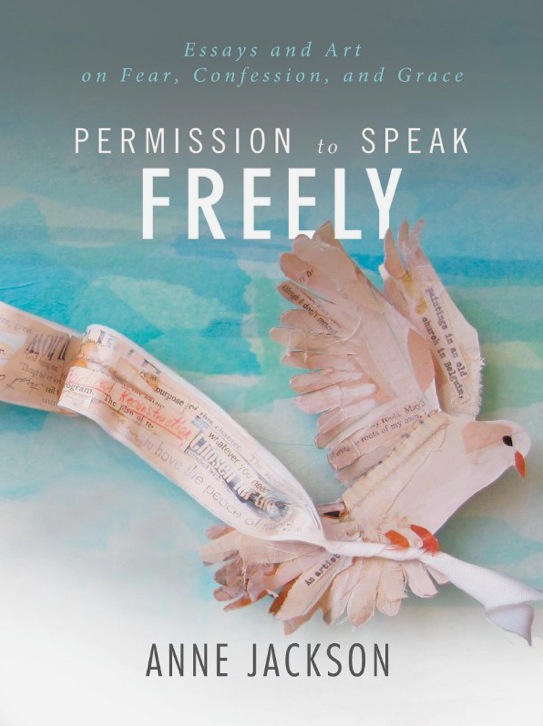
Permission to Speak Freely, by Anne Jackson


Anne Jackson's latest is an important book. Part sensational tell-all, part prophetic accusation, and part public confessional, it poses a necessary set of questions to the entire church.

  • How would our church look if we actually obeyed the Pauline imperative to bear one another's burdens? [See Gal. 6:2.]


  • How safe would I feel in a place where I could actually and honestly tell others what I had done, what I was going through, and what calamities had fallen upon my psyche?


  • How would I comfort others when I come forward about the medications I am on, or about the therapies I am receiving, or about the triumphs I have achieved from overcoming sins I otherwise wish had never seen the light of day?


  • How would it benefit the community if I give them an opportunity to learn how to comfort me?


Jackson previously gave us Mad Church Diesase, and continues to deliver the popular blog, Flowerdust.net. Part of a camp of well-known young adults (perhaps including Donald Miller and Matthew Paul Turner), she expresses her criticisms of the church not because she is critical of Christianity, but because she is critical of how poorly the church is embodying it. This makes her both controversial and prophetic.

At the risk of sounding overly idealistic, I'd like to say that for those of us who believe the church should be one of the safest and most grace-giving places a person can experience here on earth, it's time to reclaim what our faith stands for.

It's time for us to politely but passionately disagree with those who make church a "safe" place by removing all the messiness.


The first half of the book is an autobiographical descent into everything that can go wrong with a young person's involvement in western Christianity. And oh, does it go wrong! If this were a novel, we would hardly be surprised with a tragic ending of a disillusioned heroine abandoning her faith after such a series of betrayals (both as innocent victim and culpable miscreant). She intersperses the text with a sort of Christian version of Post Secret, except perhaps not so secret, which is quite the point.

But it does not end there. The second half continues with an ongoing story of healing in progress, not yet in triumph. As the healing and continuing struggle emerges, it brings the other characters--and the reader, too--along for the ride for the mutual benefit of the impromptu, virtual community. We share in the struggles. We fail together. We learn and grow and heal together. It models what the church is supposed to be doing.

In essence, the entire book is calling for contemporary Christianity not to politely dismiss the complex psychologies that complicate our faith, because in so doing, we further erode what's left of our relevance. Instead it invites us to embrace and publicly declare that these radical complications are part of who we are and part of the diversity that God is using to shape his kingdom.

If this is revolutionary, it shouldn't be.


Monday, October 11, 2010

Why I'm going to Women of Faith in Sacramento


Used with permission (Thomas Nelson, Inc.)


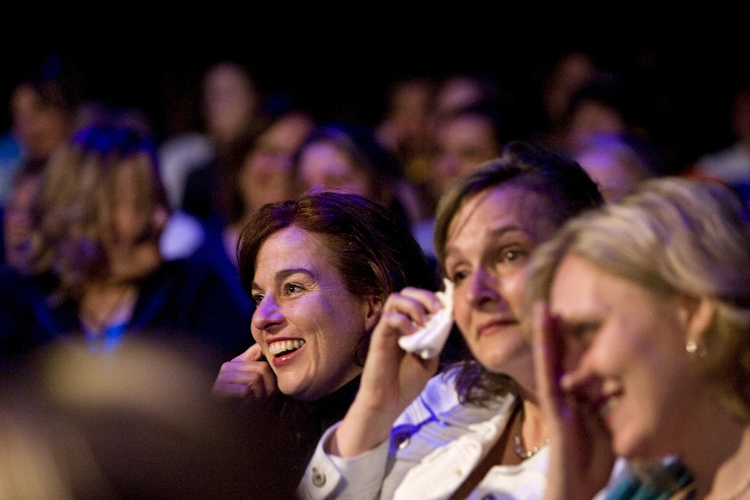
It's no secret that the Women of Faith posse is rolling through Northern California in a few weeks. The WoF touring conference could perhaps be seen as the estrogen-enriched latent cousin to the Promise Keepers men’s rallies of the late 1990s. It's an opportunity for women (especially Christian women, and especially evangelical Christian women, perhaps) to gather together in a concentrated two days of hearing from some of the most gifted speakers and encouragers in the English-speaking world.

And I'm going.

So why am I crashing the ladies event? No, it's not to hold them accountable. Four reasons come to mind:

  1. Interaction. There will be Christians here from all sorts of groups. I'm down with that. Now, don’t get me wrong. I'm not an ecumenist, but I am ecumenical. The former would like to pretend that we have no differences and declare complete unity a present reality, which results in the detrimentally unfortunate inability to present our distinctives for the benefit of others. The latter says that we have nothing to lose--and much to gain--by meeting and dialoguing with each other.

    Actually, assuming my sister has her baby on time, I'll be bringing my mom with me to the event. That's an ecumenical gathering right there.


  2. Enrichment. Color me selfish. I learn from great people. Doesn't matter if they're male or female. I want to soak in all the awesomeness that comes from the teaching there. There are some fantastic women who will be speaking!

    Actually, for the record, I think they’re letting Andy Andrews at the podium this time, too. So there'll be at least one other guy there. Phew!


  3. Personal invitation. No, I don't mean salvifically (not directly, at least). I was invited to the event by one of the speakers. This is an act of kindness and friendship. And I'm all about cultivating the future of the Church through the establishment and maintenance of meaningful personal relationships. This is one opportunity I really wouldn't want to pass up.


  4. Growth. I love women. No, really, I do. And by that I mean that I love interacting with them for a couple reasons. One is their inherent emotional sensitivity that directs me to articulate issues that would otherwise lie dormant and unaddressed perhaps forever. Another is that they inspire me to think new thoughts. I've had the fortune of being influenced by a number of amazing women. My mother. My wife. My younger sister. Teachers, leaders, authors, artists, colleagues, friends. I owe it to them to keep soaking it in, filtering it, and repackaging it for others to absorb. I've been shaped, and I'm not done being shaped. There's an ongoing dynamic.


Want to go to the conference?

I think you should, especially if you're in one of the following three categories:

  • Women who have been have been going through hell for the past months or years and need a reminder that there is a reality that promises them hope and a future, but also present blessings;


  • Women who need a jump-start and a reminder of how powerful and empowering and transformative their relationship with God can be;


  • Women who have it all together (or at least think they do) and are looking for an avenue to pass on that joy to other women.


I guess that covers just about everyone, really.

Except the guys.

Click here to register for a Women of Faith event for the 2010-2011 season, or to learn more.


Question: Have you attended a Women of Faith event in the past? How did it enrich you? What are you looking forward to for the upcoming conference?